
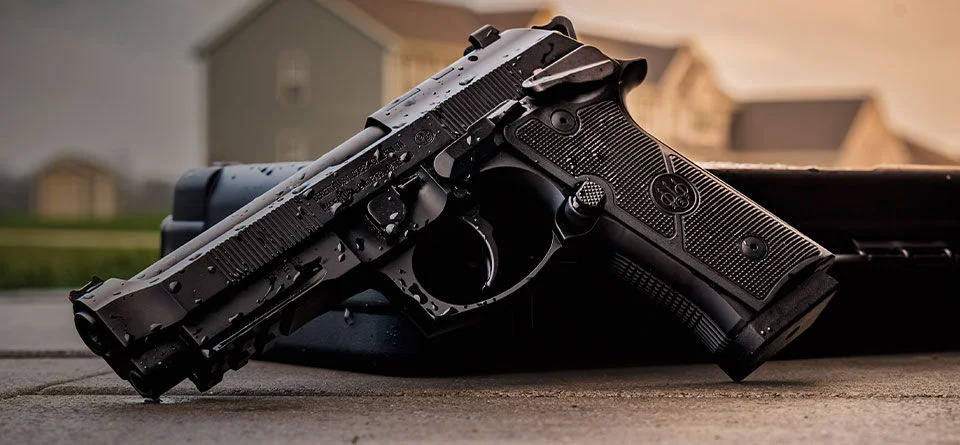
All About Pistols
Pistols come in a wide array of types for a variety of purposes and needs. Here you can learn about pistol sizes, calibers, actions, and styles. Learn the working parts of a pistol, what makes it fire, need-to-know terminology, and more.
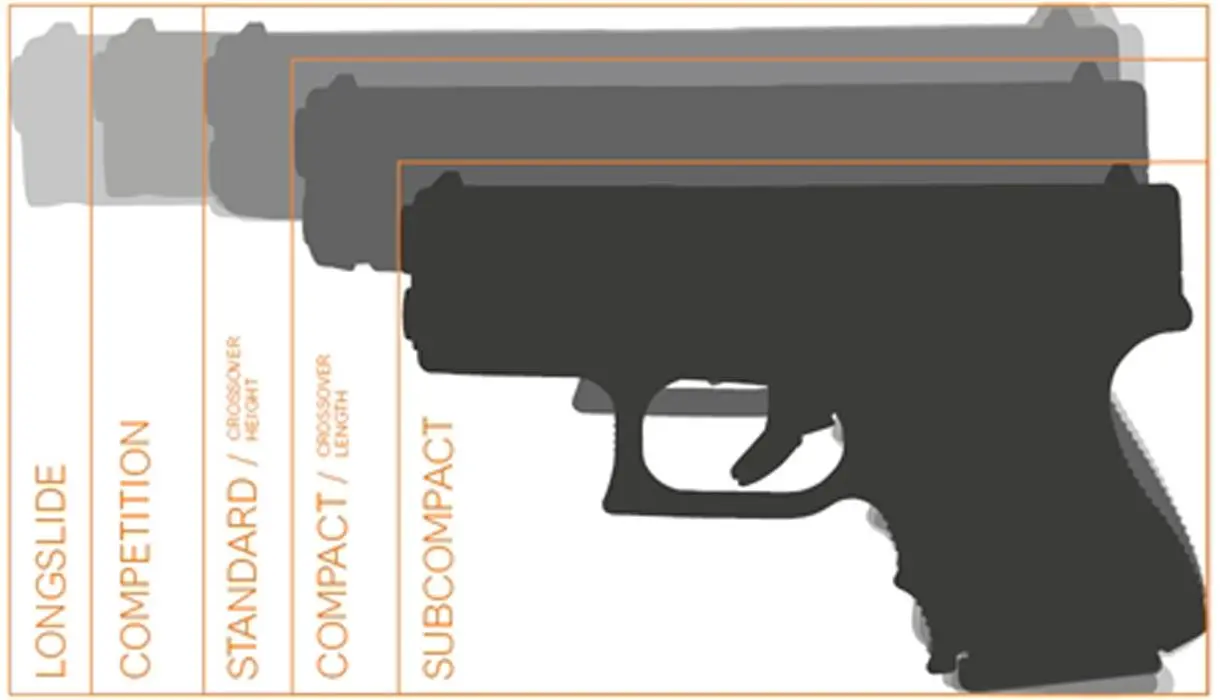
GLOCK Pistol Sizes
LONGSLIDE:
The GLOCK with the longest slide on the market offers the greatest distance between sights, fast target acquisition, and GLOCK-grade performance.
COMPETITION:
With a slightly shorter slide and barrel than the longslide models the GLOCK competition models feature adjustable rear sights and are made for sports shooters who value accuracy and reliability.
STANDARD:
The GLOCK classic that thousands of soldiers and law enforcement officers have come to appreciate. Perfect magazine capacity paired with GLOCK dependability.
COMPACT:
Slightly reduced in length and height compared to the standard models, this GLOCK offers a good punch in a compact package.
SUBCOMPACT:
A pocket-size, double stack pistol designed as a backup weapon. This subcompact gun will accept all standard GLOCK double stack magazines, making it the most versatile subcompact on the market.
SLIMLINE:
The concealed-carry choice for thousands. The GLOCK single stack slimline pistols are the smallest GLOCK pistols with the same trusted accuracy and reliability.
CROSSOVER:
GLOCK’s first ever “Crossover” pistol, the GLOCK 19X, combines the best features of two of its most popular and most trusted field-tested platforms. The full-size GLOCK 17 frame and the compact GLOCK 19 slide have joined forces to produce the ideal pistol for all conditions and all situations.
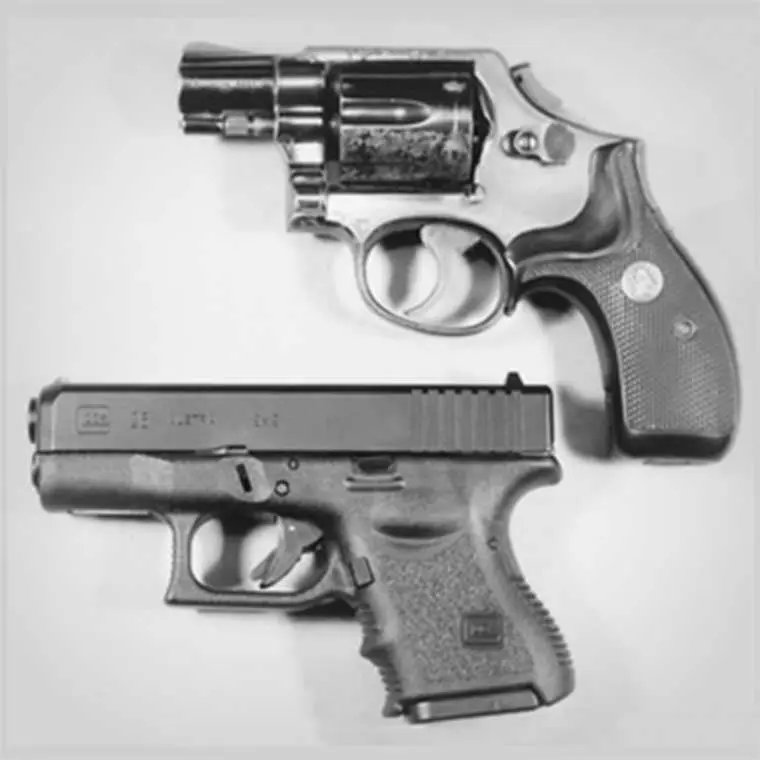
There are two main types of handguns:
Semi-Automatic Pistols
A semi-automatic pistol is a type of handgun that uses a single chamber and barrel. The pistol fires a chambered round, extracts and ejects the empty casing and then loads a new round into the chamber (if additional rounds are in the magazine) with each trigger pull.
Revolver
A revolver is a handgun that contains a cylinder with multiple chambers. When the trigger is pulled, the cylinder rotates around a central pin to align the next chamber with the firing pin. A single barrel will fire one round per trigger pull.
How a Semi-Automatic Pistol Works
There are eight actions that occur as a pistol fires a projectile:
- Feeding – Moves a cartridge from the magazine toward the barrel.
- Chambering – A cartridge moves fully into the barrel chamber area.
- Locking – The barrel and slide ‘lock’ together mechanically.
- Firing – The cartridge primer is hit by the firing pin, powder is lit, pressure builds, and the projectile (bullet) leaves the barrel.
- Unlocking – The slide and barrel mechanically separate slightly.
- Extracting – The slide moves rearwards and the extractor ‘hook’ pulls the empty cartridge casing out of the barrel by its rim.
- Ejecting – The ejector hits the empty cartridge rim, turning it/pushing it out the slide ejection port.
- Cocking (resetting the action) – The trigger and the firing pin are set together and ready to fire another round.
What is the Action of a Gun?
The action of the gun consists of all the moving parts that facilitate the loading, firing, discharging of the empty case, and unloading of the gun. There are two types of action:
Double-Action:
A long trigger pull both cocks and releases the hammer/firing pin to fire the gun.
Single-Action:
The trigger is used only to release the hammer/firing pin and does not cock the firing mechanism.
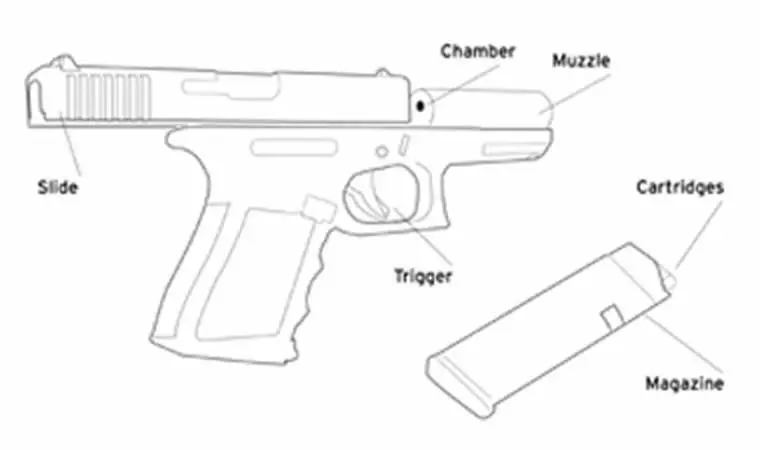
Four primary parts of a semi-automatic pistol
Frame:
The frame makes up the basic structure of the pistol to which the other major parts are attached.
Barrel:
The barrel is a long hollow tube through which the projectile travels on its way to the target. The ‘rifled’ (grooved) texture inside spins the bullet, creating velocity and accuracy. In most cases, the length of the barrel determines the velocity. The shorter the barrel, the less velocity is produced.
Slide:
The slide is the steel upper portion of a semi-automatic pistol. The slide chambers ammunition into the barrel and extracts the spent casing after the round is fired. It also slides along its tracks during the recoil process to provide the link between the breechblock and barrel.
Magazine:
The magazine contains the ammunition and ensures that it is fed properly into the barrel.
Other Parts of a Pistol
Trigger:
The trigger guard is the material around the trigger that provides protection and safety.
Hammer:
The hammer impacts the firing pin or cartridge directly, discharging the ammo.
Firing pin:
The firing pin is the hardened pin centered behind the primer of a chambered cartridge. When struck by the hammer, it impacts the primer cap of the cartridge and discharges the ammunition.
Ammunition:
Ammunition is also known as a ‘cartridge’ or ‘round’. It consists of casing, primer, powder, and projectile.
Components of Ammunition
Cartridge:
A single piece of ammunition, made up of the bullet, casing, powder, and primer.
Bullet:
The metal projectile (usually lead) that is expelled from the mouth of a firing cartridge.
Casing:
A tube that holds all the other ammunition components together, typically made from brass. The bullet is usually held in the open end of the casing.
Powder:
The gunpowder used in a cartridge that propels the bullet.
Primer:
A small cap in the head of the cartridge that, when struck by the firing pin, ignites the powder.
How is Ammunition Measured?
Ammunition is measured by the bullet’s diameter, which is known as “caliber”. The caliber can be measured in both inches and millimeters (mm).
Depending on where it was invented, ammunition is measured in millimeters or inches. 9mm ammunition originates in Europe, whereas the .40 caliber was invented in the United States.
Ammunition for a pistol corresponds to the pistol caliber, so you will use 9mm ammunition for a 9mm pistol.
Popular Semi-Automatic Pistol Ammunition Calibers
.22 Long Rifle (LR):
Rimfire cartridge often used in sport shooting and training. This caliber is ideal for first-time shooters.
.380 ACP:
This small round is known as the “three-eighty” and is a popular choice for small pistols.
9mm:
This caliber is the most popular and widely used worldwide.
.40 S&W:
Larger and slower than 9mm, with more recoil.
.45 Auto:
Slightly larger and slower than .40 caliber, with a bit more recoil.
.45 GAP:
GAP stands for “GLOCK Automatic Pistol”. This caliber rivals the firepower of the .45 Auto, but is shorter, allowing it to fit into a more compact semi-automatic pistol.
10mm:
Has greater range and is faster than the .45 Auto.
.357 Auto:
Slightly longer than the .40 caliber, and known for accuracy and stopping power.
How to Buy
There’s a lot to consider when purchasing a pistol: why you want to buy a pistol, how often you want to use it, the fit and feel of the pistol in your hand, price, and local laws. In this section, we’ll help guide you through the buying process here and in the store.
Remember: Try it before you buy it! When you are ready to try it, you can find an authorized GLOCK dealer by using our Dealer Locator Glocks Armory.
GLOCK Store
We sell GLOCK pistols online, so you can choose from our large selection of accessories, gun parts, apparel, and gifts in our online store.
Research
There are so many pistols available. How do you figure out which one is right for you? It all starts with your reason for buying.
Once you know which model or models you are interested in, contact us. we can give you expert advice and help you test out various firearms.
Steps to Buying a Pistol
The most important thing you can do before buying a pistol is to try it. Every pistol is unique in the way it feels, handles, and fires, so testing it out at a range will make sure the firearm you think you want is the right one for you.
Things to think about as you are trying various pistols:
- Needs: Pick the pistol that is best for what you want to do with it.
- Fit: Make sure the pistol fits well in your hand, and the weight and shape of the pistol are comfortable.
- Price: Pistols are available in a wide range of prices, so make sure you are trying models which fit your budget.
Most dealers and ranges will let you try firing various guns to test different sizes and calibers for comfort and fit.
Know the Laws
Every state has different laws and regulations governing gun ownership. For example, all gun purchases require valid government issued identification and a background check and some states have a mandatory waiting period before you can take it home. Some states also require you to register your pistol when you purchase it. Others require a special license for Concealed Carry. The best way to learn about the regulations in your state is to check your state’s official website.
(NOTE: Government websites have a .gov ending to their URLs, so make sure you are using an official government site when checking your state’s laws.)
Make sure you also check your county’s probate court website, since that’s usually the location where you will go to obtain your license. Those websites will tell you what ID or documents you need to bring with you, and rules about who can apply for licenses.
Remember, being as informed and prepared as possible will make this process much easier!
Firearm Legal Information
It’s very important to understand firearms laws before you purchase a pistol. Firearm laws in the United States regulate the sale, possession, and use of firearms. However, each state varies in the regulations and firearm laws, and firearm owners are subject to the firearm laws of the state they are in. Reciprocity laws allow states to honor permits from other states.
Since laws may vary in your state, a great resource for understanding state gun laws is NRA-ILA, which specializes in detailing the firearms legislation for each state. You can find information on your state there.
If you are interested in concealed carry, additional legal resources for your state can be found on USA Carry.
Necessary Gear
Having the correct gear is essential when using a firearm. Here are a few pieces of gear and accessories that we recommend when purchasing your GLOCK pistol:
Eye Protection: Eye protection is a must for target shooting and training. You need comfortable, durable eye protection with high safety ratings and a semi wrap-around feature to protect the sides of your eyes as well as the front.
Ear Protection: You should always wear ear protection while shooting. This is another must. You can choose between custom-molded ear protection, basic ear plugs or ear muffs.
Gun Case: Cases help protect your firearm as you transport them. They come with either hard or soft sides, in various styles and price ranges. Your new GLOCK will come in a hard-sided gun case, but you may want to consider a soft-sided case or a case designed to hold multiple firearms and other range accessories.
Storage: There are lots of options to store your firearm at home or work, including gun cases, combination safes, bio-metric safes, lock boxes, and more. Safely storing your firearm is a very important part of being a responsible gun owner.
Ammunition: You will need to have the necessary ammunition for practicing at the range or for self defense.
You can find many of these items, as well as a host of other accessories, in the GLOCK store.
Start Training Immediately
Every gun is unique in the way it feels, handles, and fires, so it’s important to practice with each gun you own to get as comfortable and familiar with it as possible. If you train on a regular basis, you will build muscle memory for how each gun fires, so you feel natural and comfortable with each one, even in stressful situations.
Do You Need a Training License
Each state has its own rules for how residents can obtain a concealed carry permit. Some states don’t require a permit, and some states require training that includes classroom instruction and/or live-fire qualification. Most states also require a criminal background check to ensure the purchaser is not prohibited, for any reason, from being issued a concealed carry license.
Check your state’s government website to find out what rules your state has for concealed carry. You may need to check your county website as well.
JOIN THE FIREARM SAFETY INITIATIVE WITH GLOCK
Firearm safety is the most important part of responsible gun ownership. Make sure to practice safe storage, know your laws, and follow the four rules of firearm safety.
Use Your Gun Properly & Lawfully
An essential part of responsible gun ownership is knowing federal and local gun laws and always carrying responsibly. This means staying up-to-date on the laws in your area and taking time to train with your firearm. Violating gun laws can have severe and lasting consequences.
The proper and safe function of your firearm depends on it being used for its intended purposes and not being altered or modified. Avoid altering or modifying your firearm from its original condition. Any attempt at converting your firearm from semiautomatic to fully automatic through the use of any device is illegal and strictly prohibited under state and federal laws and strongly discouraged by GLOCKS ARMORY Follow the law and stay informed of laws applicable to the purchase, sale, and use of your firearm. Never use your firearm unlawfully.
Safe Storage
Gun owners have multiple options for safely storing firearms. Gun owners can choose from safe storage options like a cable lock, lock box, biometric safes, and more. All GLOCK pistols are shipped with a cable lock to ensure all GLOCK pistol owners have the ability to safely store their firearm.

Follow The Four
When handling, maintaining and storing a firearm, it’s important to always remember to follow the rules of gun safety. There are four fundamental rules of gun safety that must be followed at all times. Adhering to these rules is essential to reducing risk and promoting safe handling. As a gun owner, you’ve made a commitment to understand and abide by these rules.
- Treat all firearms as if they are loaded.
- Never point the muzzle at anything you are not willing to destroy.
- Keep your finger off the trigger until your sights are aligned on the target and you are ready to fire.
- Always be sure of your target and what’s beyond it.